
#Smart Cities and AI: The Tech Innovations Reshaping Urban Living and Infrastructure
Copy page
 Smart city with digital network connections
TL;DR (Direct Answer)
Artificial intelligence is becoming the backbone of modern smart cities. From intelligent traffic systems and predictive infrastructure maintenance to energy optimization and public safety monitoring, AI is enabling cities to operate more efficiently and sustainably.
As urban populations continue to grow, cities must manage transportation, energy, housing, and public services at an unprecedented scale. AI-driven infrastructure allows governments and urban planners to analyze massive streams of data in real time, enabling smarter decisions that improve both city operations and quality of life.
#Why This Topic Is Important Right Now
 Modern smart city skyline with data overlay
More than half of the world’s population now lives in urban areas, and that number is expected to continue rising. Cities face increasing pressure to manage traffic congestion, energy consumption, housing demand, and environmental impact.
Traditional infrastructure systems struggle to keep up with this level of complexity. This is where artificial intelligence and connected technologies such as IoT sensors, edge computing, and real-time analytics are changing the equation.
Smart city initiatives across the world—from Singapore and Dubai to Barcelona and Seoul—are deploying AI-powered platforms to monitor traffic flow, optimize energy grids, predict infrastructure failures, and improve public safety.
Instead of reacting to problems after they occur, cities are increasingly shifting toward predictive and autonomous systems that allow them to anticipate challenges before they escalate.
#The Key Solutions Compared
| Feature | Intelligent Traffic Systems | Smart Energy Grids | Predictive Infrastructure | AI Public Safety | Autonomous Public Transport | Urban Digital Twins | Smart Waste Management |
|---|---|---|---|---|---|---|---|
| Real-time monitoring | Yes | Yes | Yes | Yes | Yes | Yes | Yes |
| Predictive analytics | Moderate | High | High | Moderate | Moderate | High | Moderate |
| Automation capability | Moderate | High | Moderate | Moderate | High | Moderate | Moderate |
| Environmental impact | High | Very High | Medium | Low | High | Medium | High |
| Deployment maturity | Growing | Mature | Emerging | Growing | Emerging | Emerging | Growing |
These technologies represent different layers of the smart city ecosystem. Some systems operate at the infrastructure level, such as energy grids and digital twins, while others directly impact daily life, like traffic management and autonomous transportation.
Together, they form an integrated urban technology stack designed to make cities more efficient, sustainable, and livable.
#Solution / Tool 1: Intelligent Traffic Systems
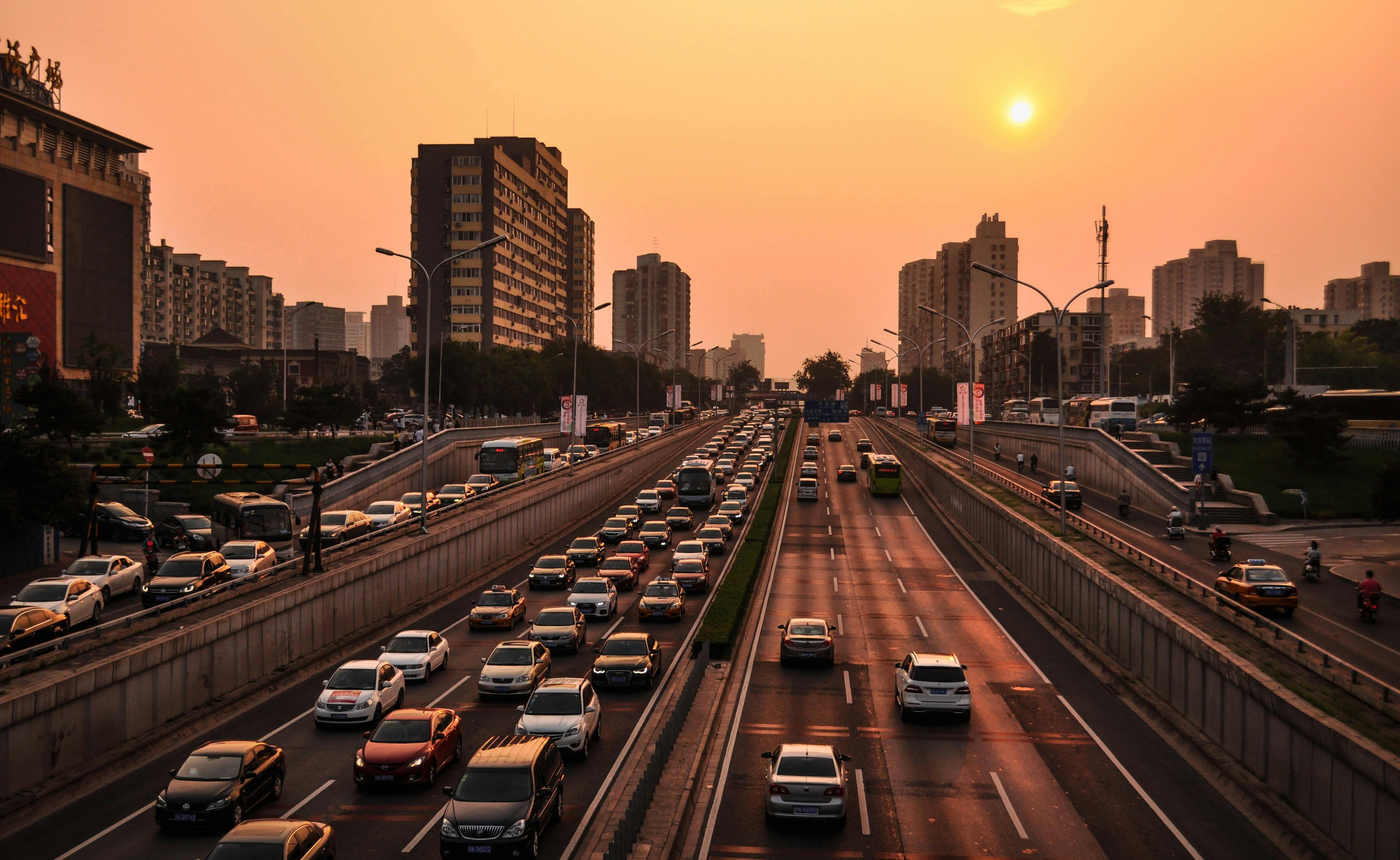 City traffic with digital analytics overlay
Traffic congestion is one of the biggest challenges in urban environments. AI-powered traffic systems analyze data from cameras, road sensors, and connected vehicles to optimize traffic flow.
Why it matters:
Reducing congestion improves productivity, lowers emissions, and improves emergency response times.
What it does:
AI models adjust traffic signals dynamically based on real-time traffic patterns and predicted congestion.
Limitation:
Deployment requires large sensor networks and coordinated infrastructure investment.
Best for:
Large metropolitan cities facing chronic congestion problems.
#Solution / Tool 2: Smart Energy Grids
 Electric power grid at sunset
AI-powered smart grids help cities balance electricity supply and demand while integrating renewable energy sources.
Why it matters:
Energy consumption is one of the largest operational costs for cities.
How it works:
AI forecasts demand patterns, automatically distributes power, and detects anomalies that could indicate failures.
Best for:
Cities transitioning to renewable energy infrastructure.
#Solution / Tool 3: Predictive Infrastructure Maintenance
 Urban bridge infrastructure engineering
Urban infrastructure such as bridges, water pipelines, and rail systems requires constant monitoring.
Why it matters:
Infrastructure failures can cause major disruptions and safety risks.
Use cases:
- Predicting bridge stress and structural fatigue
- Monitoring water pipelines for leak detection
- Forecasting rail track maintenance requirements
Limitation:
Requires large volumes of sensor data and monitoring equipment.
#Solution / Tool 4: AI-Powered Public Safety
 Urban surveillance camera monitoring street
AI systems are increasingly used to improve city safety by analyzing video feeds and sensor data.
Key difference:
Instead of relying solely on human monitoring, AI systems can detect suspicious patterns or emergencies automatically.
Best for:
Large cities managing complex public spaces such as transportation hubs and stadiums.
#Solution / Tool 5: Autonomous Public Transportation
 Autonomous city shuttle bus
Self-driving buses and autonomous transit systems are becoming an important component of smart cities.
How it works:
Autonomous vehicles use AI perception systems and sensors to navigate city environments safely.
Why it matters:
They can reduce operating costs and improve accessibility in urban areas.
#Solution / Tool 6: Urban Digital Twins
Digital twins are virtual models of cities that simulate real-world infrastructure and systems.
Best for:
Urban planners and policymakers who need to model infrastructure changes before implementing them in the real world.
By running simulations, cities can evaluate traffic changes, construction projects, or environmental policies before making costly decisions.
#Solution / Tool 7: Smart Waste Management
 City recycling and waste management system
AI-powered waste management systems use sensors and route optimization algorithms to improve waste collection.
Why it matters:
Waste collection is one of the largest operational expenses for city governments.
Platform support:
Sensors in trash containers monitor fill levels and optimize pickup routes.
Best for:
Cities seeking to reduce environmental impact and operational costs.
#Which Should You Choose?
| Your Priority | Best Choice | Runner-Up |
|---|---|---|
| Reduce traffic congestion | Intelligent Traffic Systems | Autonomous Transit |
| Energy efficiency | Smart Energy Grids | Digital Twins |
| Infrastructure reliability | Predictive Maintenance | Digital Twins |
| Urban safety | AI Public Safety | Smart Traffic Systems |
| Sustainability | Smart Waste Management | Smart Energy Grids |
Cities typically adopt these technologies gradually rather than all at once. Infrastructure upgrades require careful planning, investment, and coordination between government agencies and private technology providers.
The most successful smart city initiatives focus on solving specific problems first before expanding to larger integrated systems.
#What This Means for Readers
 Futuristic city skyline with smart technology
Smart cities powered by artificial intelligence will fundamentally change how urban environments function.
#Short term
Cities will deploy AI solutions for targeted problems such as traffic optimization, energy monitoring, and infrastructure diagnostics.
Residents may notice improvements in public transport efficiency and city services.
#Medium term (6–12 months)
Integrated city data platforms will begin connecting different systems such as transportation, utilities, and emergency services.
AI-driven urban analytics will help governments plan infrastructure investments more accurately.
#Long term (12–24 months)
Fully integrated smart city ecosystems may emerge where traffic systems, energy grids, and urban infrastructure operate autonomously.
Urban environments will become more adaptive, sustainable, and responsive to citizens' needs.
Ultimately, the goal of smart cities is not just technological innovation — it is creating urban environments where technology enhances quality of life while reducing environmental impact.
#FAQ
What is a smart city?
A smart city uses digital technologies such as AI, IoT sensors, and data analytics to improve urban infrastructure, services, and quality of life.
How does AI improve city infrastructure?
AI analyzes real-time data from sensors and systems to optimize operations, predict failures, and automate decision-making.
Are smart cities environmentally friendly?
Yes. Many smart city technologies focus on reducing energy consumption, traffic emissions, and resource waste.
Which cities are leading in smart city development?
Cities like Singapore, Dubai, Barcelona, Seoul, and Amsterdam are widely recognized as leaders in smart city initiatives.
Will smart cities require massive infrastructure investment?
Yes. However, many governments view these investments as essential for long-term sustainability and economic growth.